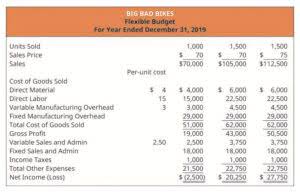
If you have high sales revenue but still have a low profit margin, it might be time to take a look at the figures making up your net income. You can calculate your net income (the money that you have earned at the end of the day) by subtracting your expenses from your revenue. It’s possible that your net income will demonstrate a net loss when your business is in its early stages. The ultimate goal of any business should be positive net income, meaning that the business is profitable. The business has paid $250 cash (asset) to repay some of the loan (liability) resulting in both the Purchases Journal cash and loan liability reducing by $250.

What is Operating Profit Ratio? Guide With Examples
The revenue a company shareholder can claim after debts have been paid is Shareholder Equity. The accounting equation states that the amount of assets must be equal to liabilities plus shareholder or owner equity. Now, these changes in the accounting equation get recorded into the business’ financial books through double-entry bookkeeping. The owner’s equity is the value of assets that belong to the owner(s).
What are Specific Names for Equity on the Balance Sheet?

It includes the capital invested in the company accounting equations and the profits it has kept over time. To fully understand the accounting equation, you need to look at each part it’s made of. Here’s a quick breakdown of assets, liabilities, and equity, and how they might show up in your world. To begin with, it doesn’t provide an analysis of how the business is operating.Furthermore, it doesn’t totally keep accounting mistakes from being made.
Sample Accounting Equation Transactions
The accounting equation shows the amount of resources available to a business on the left side (Assets) and those who have a claim on those resources on the right side (Liabilities + Equity). Owners can increase their ownership share by contributing money to the company or decrease equity by withdrawing company funds. Likewise, revenues increase equity while expenses decrease equity.
- You can calculate your net income (the money that you have earned at the end of the day) by subtracting your expenses from your revenue.
- The inventory (asset) will decrease by $250 and a cost of sale (expense) will be recorded.
- The accounting equation forms the foundation for key financial reports like the Balance Sheet and Income Statement.
- It ensures every transaction makes sense mathematically and logically.
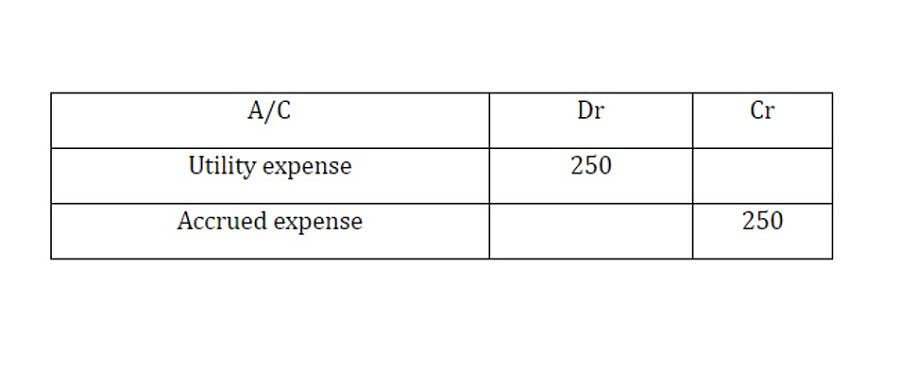
- Accrued expenses increase liabilities (amounts owed) and decrease equity because they are expenses reducing retained earnings, without an immediate cash outflow.
- The accounting equation works by ensuring that every financial transaction affects at least two accounts, keeping assets equal to the sum of liabilities and equity.
- Creditors include people or entities the business owes money to, such as employees, government agencies, banks, and more.
- These items provide a source of funding to run the operations of the business.
- The equation is an important concept used to assess the financial condition of the company.
- A balance sheet provides a snapshot of what a company owns (assets), what it owes (liabilities), and the value left for the owners (shareholders’ equity).
If you want to know more about accounting errors and how to spot them, we recommend reading Common Accounting Errors – A Practical Guide With Examples. From setting up your organization to inviting your colleagues and accountant, you can achieve all this with Deskera Books. You can witness the easy implementation of the tool and try it out to get a renewed experience while handling your accounting system.
Examples
Alternatively, Edelweiss may be facing business risks or pending litigation that could limit its value. Consideration should be given to these important non-financial statement valuation issues if contemplating purchasing an investment in Edelweiss stock. This observation tells us that accounting statements are important in investment and credit decisions, but they are not the sole source of information for making investment and credit decisions. The accounting equation uses total assets, total liabilities, and total equity in the calculation.
Producing the Financial Statements
Having a grasp on this accounting formula can help you grow your business by reinvesting, paying out additional dividends, financing a new product, or even paying off credit or debt. Most businesses use credit to operate, such as business loans, https://www.alerte-administres.fr/virtual-bookkeeping/ mortgages, and pension obligations. The cash ratio equation measures your company’s liquidity, or ability to pay off all of these liabilities at once if required. Businesses can monitor changes in assets, debts, and owner’s equity, making it easier to assess how a company grows or accumulates debt over time.
Drawings are amounts taken out of the business by the business owner. For example, if a company takes on a bank loan to be paid off in 5 years, this account will include the portion of that loan due in the next year. You can download CFI’s free balance sheet template in Excel to input figures for any company and see how a balance sheet works in real time. Use the accounting equation to answer each of the following questions. Assets can be described as the value of the things owned by the firm for the purpose of using them in the business.
- With a passion for making finance accessible, she writes clear, actionable content that empowers individuals to make informed financial decisions.
- Alternatively, Edelweiss may be facing business risks or pending litigation that could limit its value.
- Each component of the equation must be accurately recorded and reported to maintain the integrity of financial statements.
- Other names for owner’s equity you may face are also net assets, or stockholder’s equity (for public corporations).
- Accumulated Other Comprehensive Income (Loss), AOCIL, is a component of shareholders’ equity besides contributed capital and retained earnings.
- It’s extremely important for businesses in that it provides the basis for calculating various financial ratios, as well as for creating financial statements.
This equation is often called the “foundation” of accounting because it shows the relationship between what a business owns, what it owes, and what belongs to the owners. Every financial transaction your business records must keep this equation in balance—that’s what makes it the backbone of double-entry bookkeeping. When one side of the equation changes, the other side must change too. If the accounting equation does not balance, it indicates an error in financial reporting or data processing. This discrepancy must be investigated and corrected to ensure accurate financial statements.
- Consideration should be given to these important non-financial statement valuation issues if contemplating purchasing an investment in Edelweiss stock.
- The equity consists of the contribution of the owner and the retained earnings.
- Understanding this equation is crucial for anyone involved in finance or accounting, as it provides insights into a company’s financial health.
- The quick ratio equation, also known as the acid-test ratio, evaluates a company’s ability to meet its short-term obligations using its most liquid assets.
- Using Apple’s 2023 earnings report, we can find all the information we need for the accounting equation.
Some assets are less liquid than others, making them harder to convert to cash. For instance, inventory is very liquid — the company can quickly sell it for money. Real estate, though, is less liquid — selling land or buildings for cash is time-consuming and can be difficult, depending on the market.